
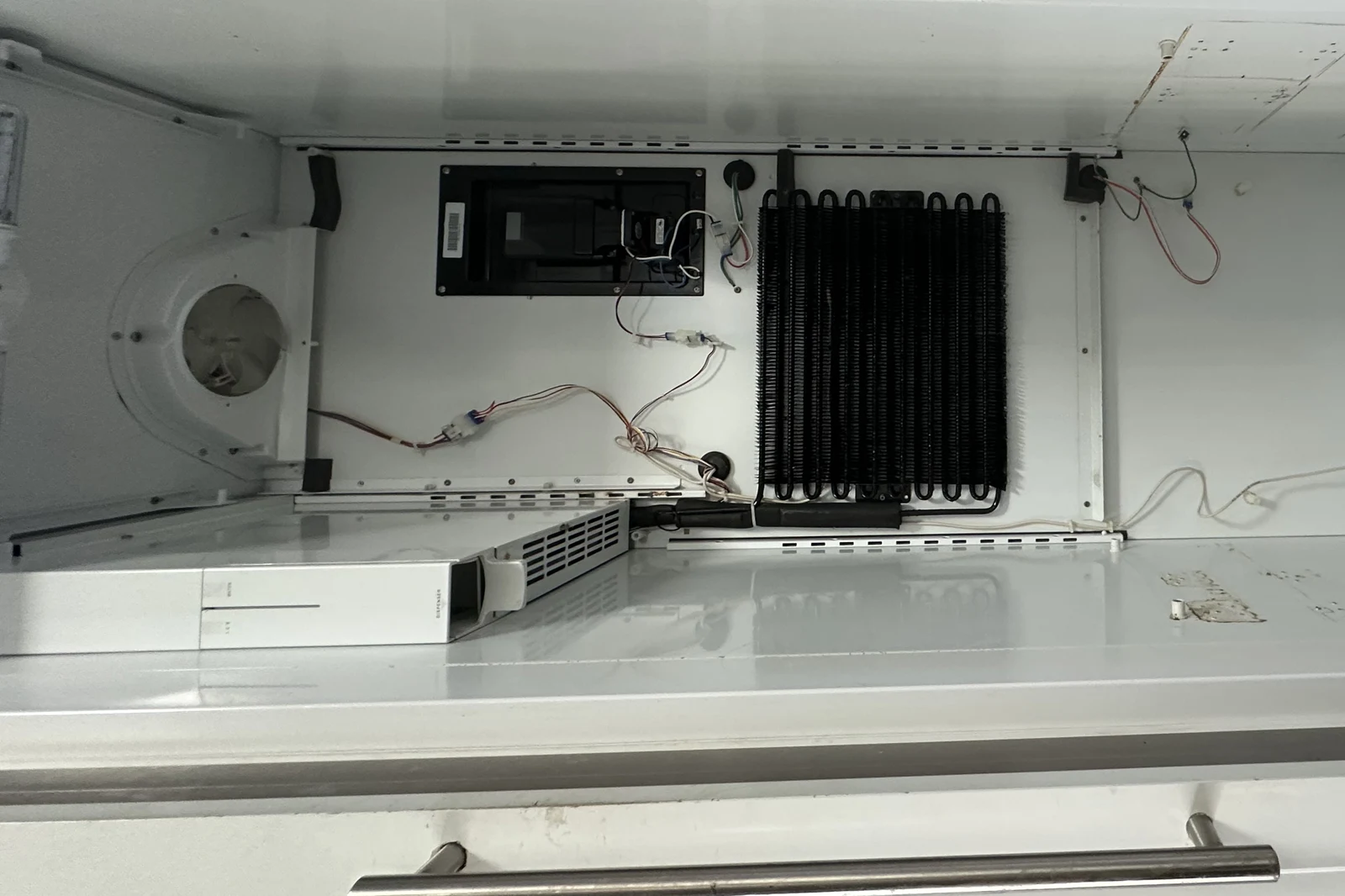
Before pulling the refrigerator out from the wall: unplug it first if you're checking anything near the back panel, compressor, or an electrical connection, and be careful of a wet floor around a live outlet. Everything below assumes the unit is unplugged while you're looking behind or underneath it.
1. Clogged or frozen defrost drain
This is the single most common cause of a refrigerator leak. Most fridges automatically defrost the evaporator coil on a schedule, and that meltwater is supposed to run down a small drain tube into a pan underneath the unit. When that drain is blocked, the water backs up instead — sometimes into the bottom of the fridge, sometimes straight onto the floor.
DIY checks: Look for a small drain hole at the back of the freezer or fridge compartment (location varies by model) and check it isn't packed with ice or debris. Some manufacturers show the exact spot in the owner's manual.
When to call a pro: If the drain is clear at the visible end but water is still backing up, the blockage is likely further down the tube or at the drain pan, which usually means pulling the unit out and accessing it from behind.
2. Ice maker or water line problem
If the leak tracks back to the ice maker or water/ice dispenser rather than a general puddle under the fridge, the water line itself is the more likely cause.
DIY checks: Carefully pull the fridge out and look at the water line connection at the back — a fitting that's damp or shows mineral crusting is usually the leak point. Check the line itself for kinks or visible damage.
When to call a pro: A failed water inlet valve is inside the fridge's rear panel and needs to be tested and replaced correctly to avoid a repeat leak — this isn't usually a simple tighten-and-done fix.
3. Cracked or overflowing drain pan
The drain pan sits underneath the refrigerator and catches the water that comes down the defrost drain, letting it evaporate gradually. A damaged or misaligned pan sends that water onto the floor instead.
DIY checks: With the fridge unplugged and pulled out, look underneath for the pan (often visible from the front or back depending on the model) and check it's intact and sitting level.
When to call a pro: A cracked pan needs a model-specific replacement part, and if the pan is fine but still overflowing, that usually points back to a drain issue that's worth diagnosing together rather than separately.
4. Door seal not sealing properly
A gasket that isn't sealing lets warm, humid air into the fridge continuously. That moisture condenses inside and can show up as water pooling on shelves or dripping from the door area — not always a mechanical "leak" in the plumbing sense.
DIY checks: Close the door on a piece of paper at several points around the seal — if it slides out easily, the seal isn't gripping there. Wipe the gasket clean and check for visible cracks or gaps.
When to call a pro: Gasket replacement is usually straightforward once the correct part is identified, but a leveling or hinge issue causing the door not to close flush is worth having diagnosed properly first.
5. Refrigerator not level
Most refrigerators are designed to sit very slightly tilted back, which helps the door swing shut on its own and keeps internal drainage working the way it's supposed to. A unit that's level or tilted forward can drain incorrectly.
DIY checks: Place a level on top of the fridge front-to-back and side-to-side. Most manufacturers recommend a slight backward tilt — check your model's manual for the specific guidance.
When to call a pro: Adjusting leveling feet is a reasonable DIY task; if leveling doesn't resolve the leak, the actual cause is elsewhere and worth having tested directly.
6. Blocked airflow causing excess ice buildup
Vents inside the fridge and freezer compartments circulate cold air across the evaporator coil. When they're blocked, ice can build up beyond what the automatic defrost cycle is designed to handle, and the resulting meltwater overwhelms the drain.
DIY checks: Check that vents inside the freezer and fridge compartments aren't blocked by food packages, and look for visible frost or ice buildup beyond a thin, normal layer.