
Before you check anything inside the freezer or behind it, unplug the unit or switch off its breaker. Melting frost means water, and water plus a live appliance is a shock hazard, so never work inside a running freezer with wet hands or standing water on the floor. Look and listen all you want with the power on, but cut power before you touch panels, coils, or wiring, and never open the sealed refrigerant system or test electrical components live.
1. Heavy frost from a failed defrost system
This is the most common reason a freezer slowly stops freezing while the fridge still works. Every frost-free freezer runs a defrost cycle several times a day to melt frost off the evaporator coils behind the back panel. When a defrost component fails, frost keeps building until it blocks airflow across the coils, and the freezer warms up over days, not hours.
DIY checks: Look at the frost pattern. A thick, even sheet of frost or ice on the back interior wall points to a defrost failure. As a test, unplug the freezer, empty it, and let it thaw for 24 hours with the door open. If it cools normally afterward but frosts over again within a week or two, a defrost component has failed.
When to call a pro: Figuring out which component failed requires electrical testing of the heater, thermostat, and control board. That is live-circuit work, so leave it to a technician. We carry common defrost parts and back the repair with our 90-day warranty.
2. Evaporator fan not running
The evaporator fan pulls air across the cold coils and pushes it through the freezer. If the fan quits, the coils stay cold but the air around your food does not. Since most refrigerators cool the fresh-food side with air from the freezer, a dead fan often warms the fridge shortly after.
DIY checks: Open the freezer door and press the door switch so the unit thinks the door is closed. You should hear the fan spin up within a few seconds. Silence, or a grinding or chirping noise, means fan trouble. If the blade is iced over, a full manual defrost may free it temporarily, but the ice will return unless the underlying cause is fixed.
When to call a pro: Replacing the fan motor means removing the rear interior panel and disconnecting wiring, and an iced-up fan usually signals a defrost problem underneath. A technician can confirm both in one visit.
3. Dirty condenser coils
The condenser coils under or behind the unit release the heat pulled out of the freezer. When they cake up with dust and pet hair, the system cannot shed heat, so it runs longer and cools less. The freezer, which needs the most cooling capacity, suffers first.
DIY checks: Unplug the unit, pull it out, and clean the coils with a coil brush and a vacuum. Most are behind a kick plate at the bottom front or on the back. If it has been years since the last cleaning, this alone can restore several degrees of cooling. Leave a couple of inches of clearance behind the unit when you push it back.
When to call a pro: If the coils are clean and the freezer still cannot hold temperature, the problem is elsewhere in the system and worth a proper diagnosis.
4. Leaking door gasket
The rubber gasket around the door is the only thing keeping warm, humid room air out. A hardened, torn, or dirty gasket lets air seep in constantly, which raises the temperature and coats the interior in frost as the moisture freezes. The compressor ends up running almost nonstop trying to keep up.
DIY checks: Close the door on a strip of paper and pull. If it slides out with no resistance, the seal is weak at that spot; repeat around the full perimeter. Wipe the gasket with warm soapy water, since grime alone often breaks the seal. Also confirm the door actually closes flush and nothing inside is propping it open.
When to call a pro: A torn gasket needs a model-specific replacement, and a sagging door may need hinge adjustment. Both are quick jobs for a technician and cheap compared to running a compressor around the clock.
5. Blocked vents from overpacking
Cold air enters the freezer through vents, usually on the back wall, and needs room to circulate. A freezer packed to the ceiling, or bags pressed against the vents, traps the cold air in one spot while the rest of the compartment warms up. This one costs nothing to fix.
DIY checks: Find the vents and clear at least a few inches of space around them. Aim for a freezer that is full but not stuffed, since frozen food helps hold temperature but air still needs paths between packages. Give it 24 hours and check the temperature again with an inexpensive freezer thermometer.
When to call a pro: If the vents are clear and airflow is unobstructed but the freezer still will not reach zero degrees, the problem is mechanical, not organizational.
6. Start relay or compressor trouble
The compressor is the pump that drives the whole cooling system, and the start relay is the small component that kicks it on. A failing relay often makes a distinct clicking sound every few minutes as the compressor tries and fails to start. A compressor that runs constantly but barely cools is a different, more serious version of the same story.
DIY checks: Listen at the back of the unit. A healthy compressor produces a steady low hum with mild vibration. Repeated clicking followed by silence points to the relay; total silence with the interior light on and no cooling points to the compressor or its controls. That is as far as diagnosis should go without a meter and training.
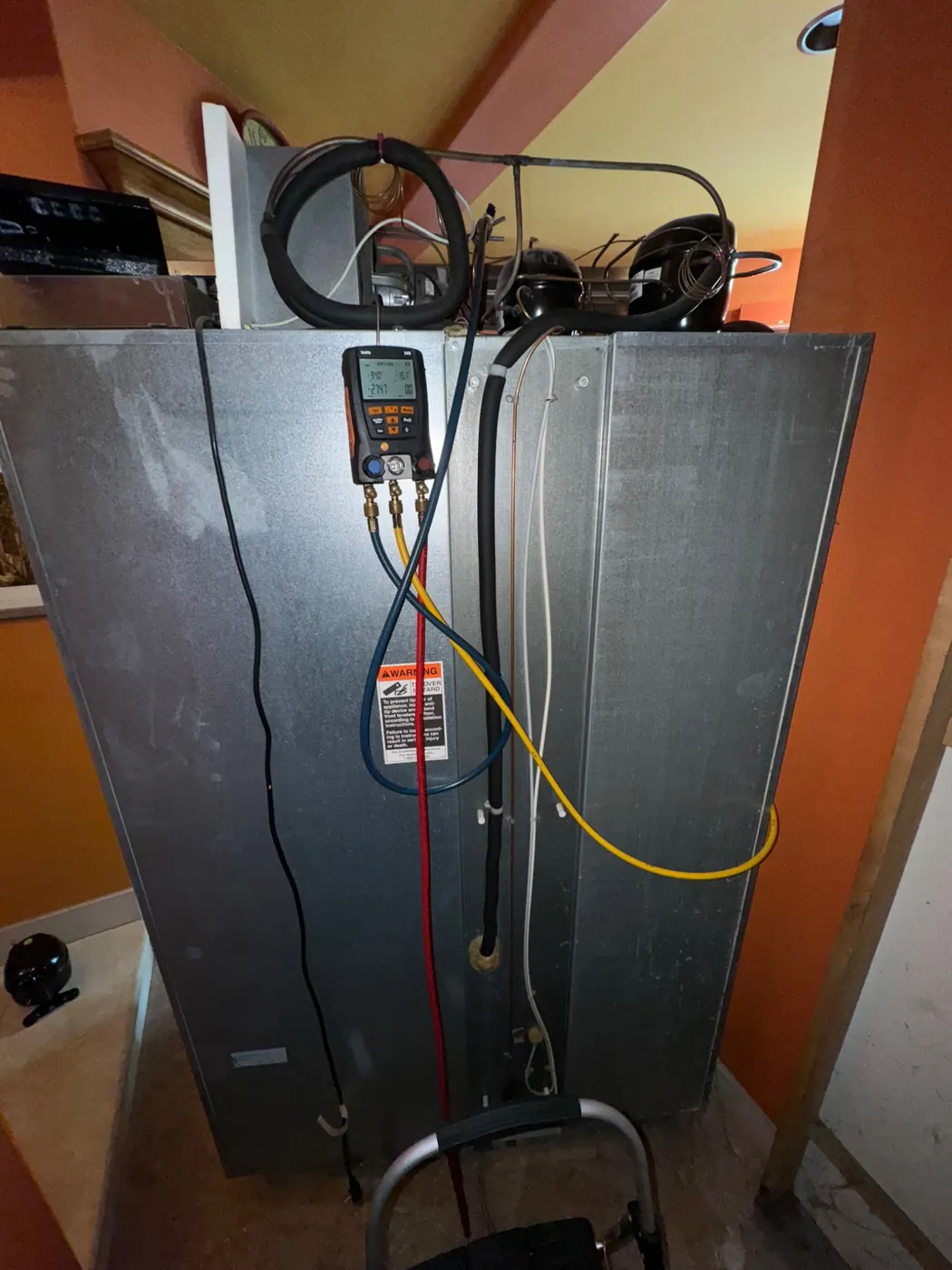
When to call a pro: Relay and compressor work involves live electrical testing and, for the compressor itself, opening the sealed system. Both are strictly professional territory. The good news: a bad relay is one of the cheaper repairs on this list, so do not assume the worst from a clicking sound.
7. Sealed system problem
The sealed system is the closed loop of refrigerant, compressor, and tubing at the heart of the unit. A leak or internal restriction means the system physically cannot move enough heat no matter how long it runs. This is the least common cause on the list, which is why it should be suspected last, after everything above is ruled out.
DIY checks: Observation only. A telltale sign is frost on just one small section of the evaporator coil while the rest stays bare, paired with a compressor that never shuts off. Never puncture tubing, attempt to add refrigerant, or open any part of the sealed loop; refrigerant handling requires EPA certification and specialized equipment.
When to call a pro: All sealed-system work is professional-only. We will also be straight with you about whether it makes financial sense: on an older unit, a sealed-system repair can approach replacement cost, and you will get that math in a written quote before any work begins.