GE Appliance Repair in Palos Verdes & the South Bay
GE refrigerators, washers, dryers, dishwashers, ovens, ranges, and cooktops.
GE Appliances has designed and built appliances at Appliance Park in Louisville, Kentucky since the 1950s, and it still engineers and manufactures there under Haier ownership dating to 2016. What shapes a GE service call is the range sold under one badge: base GE, GE Profile, Café, and Monogram share a corporate lineage but not an engineering brief. A Monogram built-in column and a GE top-loader are entirely different jobs. On these machines the model number tells us far more than the nameplate does.
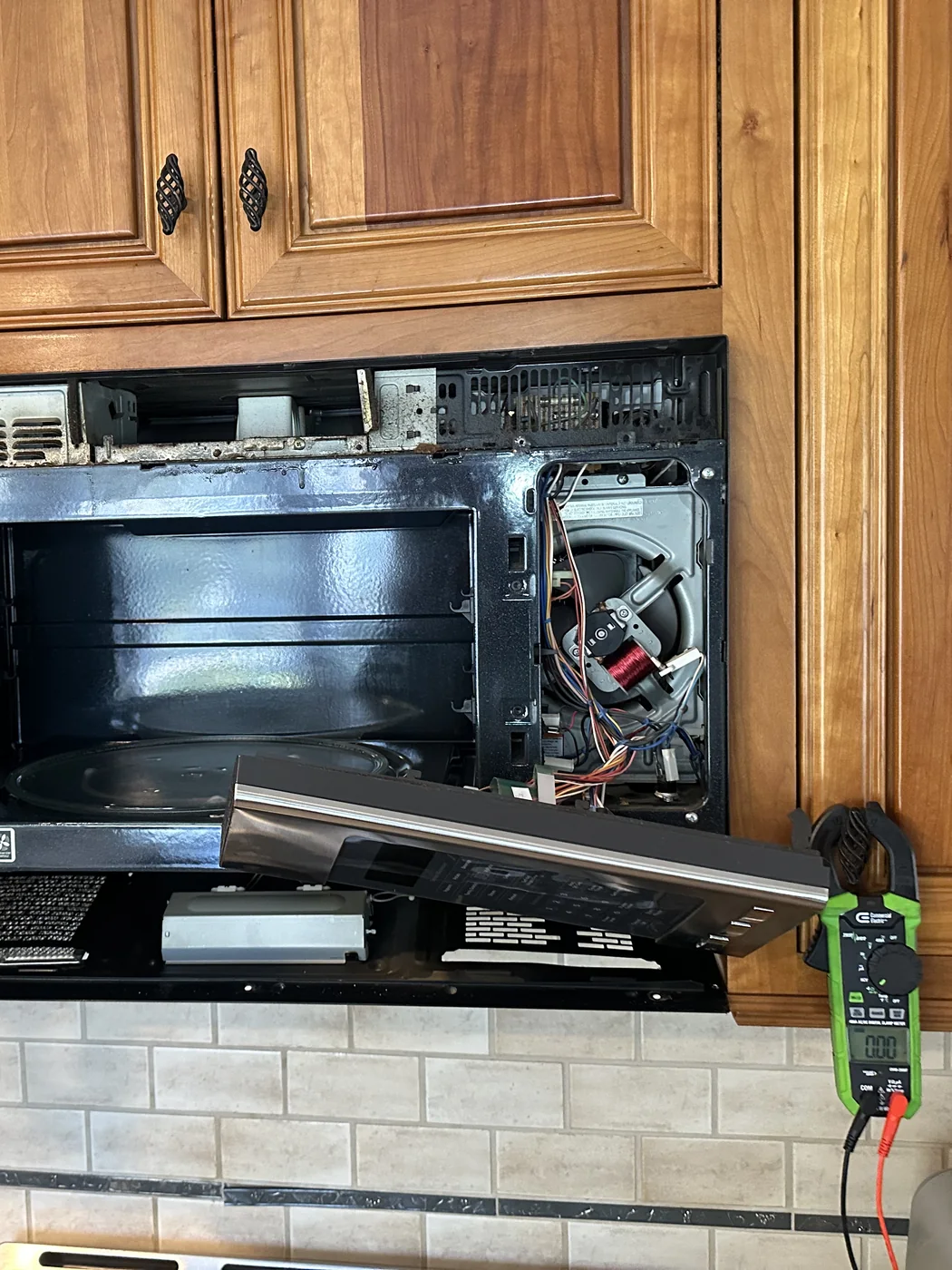
GE Monogram refrigeratorGE microwave diagnostics
Appliance Park engineering: shared platforms, differentiated by the board
GE engineers for volume. One mechanical platform is carried across many model years and several price points, with the differences expressed mostly in the control board, the software, and the trim rather than in the chassis. That is why a GE repair often turns into an electrical question about a mechanically sound machine. Hydrowave laundry is the clearest example: a brushless DC motor drives the basket directly instead of through a belt and transmission, so an agitation complaint that used to be a worn drive block becomes a motor-control and sensing diagnosis. Two washers that look identical on the pedestal can take different boards.
Hydrowave top-loaders that fill and drain normally but will not agitate
motor control faults that present to the owner as a completely dead washer
look-alike models on the same platform requiring different, non-interchangeable boards
excessive vibration or walking on direct-drive top-loaders
front-load washers where the door lock circuit ends the cycle before it starts
What a Café or Monogram board is doing that a base GE board never has to
Move up the GE range and the mechanics change less than the electronics do. A base GE oven board switches a bake element and reads one sensor. A Profile or Café board of the same generation also drives a touch-glass interface, a convection system, probe inputs, and connectivity, so one board failure takes more of the appliance down with it. Monogram goes further again: built-in refrigeration with its own sealed-system architecture, dual-fuel cooking, and columns that must come out of cabinetry before anything is visible. Café's brass and copper hardware is a finish layer over Profile-grade engineering, not a different machine underneath.
Monogram built-in column refrigerators with evaporator fan or sealed-system symptoms
Profile and Monogram wall ovens where touch-glass control fails but heating is intact
Café induction cooktops losing one element while the others still respond
built-in units that have to be pulled from cabinetry before any real diagnosis
connected models where the app reports a fault the appliance itself never displays
Part prefixes, supersessions, and what GE stops making first
GE's part numbering is its own map. Prefixes group parts by product family, and a technician who reads them can tell a refrigeration part from a cooking or laundry part before opening a catalog. Because GE has sold in enormous volume for decades, common wear parts stay widely available and often inexpensive, which makes older machines worth fixing more often than owners expect. The pinch points sit elsewhere: main control boards get discontinued long before the mechanical parts do, superseded numbers sometimes ship a physically revised part that needs a bracket or harness adapted, and Monogram-specific components carry longer lead times and built-in pricing.
discontinued main control boards on refrigerators past roughly ten to twelve years
superseded part numbers where the replacement differs physically from the original
Monogram-only components with longer lead times than mass-market GE parts
Café hardware kits ordered separately from the appliance platform underneath
donor-unit boards carrying the wrong software revision for the model
When the board is both the suspect and the only witness
Because so much GE behavior routes through one main board, a single symptom has very different repairs behind it. A warm fresh-food compartment can be a defrost heater, a sensor drifting out of range, or adaptive defrost logic that never calls for a cycle, and a circuit that tests fine on a cold coil can still fail in service. An oven that will not heat is as often a failed board relay as a failed element. Dryer noise needs its own discipline, since rear drum bearing wear imitates rollers, an idler, and a belt until you separate them. We read the tech sheet inside the machine before quoting anything.
warm refrigerator where the defrost circuit tests good on a cold evaporator
dryer rumble or squeal tracing to the rear drum bearing rather than the rollers
error codes naming a component when the real fault is wiring or the board driver
no-heat ovens caused by a board relay instead of the bake element
intermittent faults that clear on a power cycle and return within days
We are not a GE Appliances or Haier authorized service center, and no work reaches us through Appliance Park. PV Appliance Repair is an independently owned shop in Rancho Palos Verdes; our technicians are hired and trained by us, and we answer to the homeowner who called. The GE, Profile, Café, and Monogram names appear here only so you can tell which equipment we are describing. GE has no connection to this business and does not endorse it.
GE Appliances repair questions
In practical terms, no. GE Appliances kept its Louisville engineering and US manufacturing after the 2016 sale, model platforms carried forward across the transition, and the parts distribution network we order from every week did not change hands under us. Machines built before and after 2016 are diagnosed the same way. Ownership shows up in corporate news, not in your defrost circuit.
Yes, but they are different jobs and we staff them that way. Oleg has 12+ years across the widest range of brands and handles the volume GE, Profile, and Café equipment. Rick, with 9+ years on built-in and premium equipment including Sub-Zero, Viking, and Wolf, is who we send for Monogram built-ins, where the installation and the sealed system matter as much as the fault itself.
We would rather bring truck stock and confirm it on site. GE error codes report where the board lost an expected signal, which is not always where the fault lives. A code pointing at a motor or a sensor frequently resolves to a connector, a rubbed harness, or the board's own driver. Give us the code and the full model number when you call (424) 365-9555 and it does help us load the van intelligently.
Usually yes. Hydrowave puts a brushless DC motor under the basket with an inverter board controlling it, so there is no transmission or drive belt to wear out, and the failures land on the motor, the control, the harness between them, or the shifter and speed sensor. Those are individually replaceable parts. We test the drive circuit rather than assuming the whole motor assembly, because the two prices are not close.
Only if the hardware itself is what broke. Handles, knobs, and trim kits are ordered as finish parts and are priced accordingly, but the platform underneath is Profile-level engineering, so a Café oven's element, fan, or board costs what the mainstream GE equivalent costs. We tell you which side of that line your repair falls on before ordering, since a cosmetic part and a functional one carry very different lead times too.
For most of what fails, yes. Decades of volume production mean fans, heaters, thermostats, seals, belts, rollers, and switches for older GE machines remain in circulation and are usually inexpensive. What disappears first is the electronics. If an older unit needs its main control board, we check availability and price before quoting, because that single part decides whether the repair makes sense while everything else on the machine is still supportable.
Local coverage
Appliance repair across the South Bay
Use a location page for neighborhood details, ZIP codes and nearby service information.